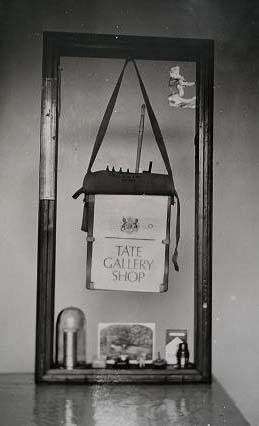
I've just typeset and proofed (on my 1843 Albion Press) this Andrew Marvell poem, The Mower to the Glow-Worms, in 24pt Caslon Roman, and put it in the window of the Tom Paine Press & Gallery in Lewes High Street.


ALAN SILLITOE, 1928-2010
I wrote the text below as my contribution to 'Every Day of the Week', A Celebration of the Life and Work of Alan Sillitoe, held at the British Library Conference Centre, London, on Wednesday 20th April 2011.
The speakers were: Richard Bradford (chair), Peter Chasseaud, Tansy Davies, Margaret Drabble, Elaine Feinstein, Alan Jenkins, Miranda Seymour and D. J. Taylor.
HIS HEAD WAS A MAP
Dr Peter Chasseaud
Alan was my beloved and generous mentor in the world of maps, and wrote forewords for two of my books. It is an honour and a privilege to be asked to make a contribution to his Memorial Event at the British Library. Unlike the explorer who believes he has discovered some terra previously incognita, only to find that another has preceded him, I was always aware that Alan had discovered the route and blazed the trail, and was more than content to sit at the feet of the master. Like Alan, I have continually to try to answer the question, ‘Why Maps?’ Here I use Alan’s words, and my own.
In 1975, Alan wrote:
‘In the beginning was the map. . . We are all born into the world with a sense of place, simply because a certain part of our senses are rooted forever to the locality in which – as an old-fashioned novelist might put it - we first saw light. We don’t see it straight away, however – though we can smell it, hear it, and touch it. Little by little it emerges greyly, flattish, without the latitude and longitude of social guidelines; and then as the senses develop and the years grow in us, we see it in our profile, contour and full colour.’ (‘A Sense of Place’, Geography, August 1975, 685-9, p.685).
A reluctant man-of-action (while he was accepted for pilot training in the Fleet Air Arm, his real love was aerial navigation), Alan, like Ulysses in Troilus & Cressida, was more interested in ‘the bed-work, mapp’ry, closet-war’ of staff work and the back-room, and in understanding and setting out the geographical and other coordinates of our human stage. He not only literally grounded himself and his characters in this way but, through his understanding of aerial navigation (derived from his teenage wartime years in the Air Training Corps and his national service as a RAF radio-operator), soared like Ariel above the surface of the earth he described so well in all its topographical complexities, and bounced his wireless waves off the heaviside layer. To his generation, well educated in school geography lessons in Mercator’s projection, map-reading and the technicalities of contours, hachures, spot-heights, conventional signs, magnetic, true and grid north, magnetic variation and even rhumb lines and loxodromes, such geographical language was not totally forbidding to publishers and public, and could be used and read without fear. Meridians and parallels became the warp and weft of his texts.
He related maps to people, and to human dramas, fixing the co-ordianates of his characters in the landscape. He listened to old men’s tales of the front, and found trench maps in cardboard boxes in second-hand bookshops. He heard stories about the Jewish Pale of Settlement in eastern Europe and sought out maps that showed the towns and villages that pogrom, war and worse had visited and destroyed.
Alan also loved the material culture of all this (quite apart from his pipe and leather waistcoat!) – the linen-backed maps, the compass and other surveying instruments such as the theodolite and the Abney level, his morse key and his bomber wireless set, both of which he was skilled at using. And of course he extended this love of the material to the typewriter and the book. (But there was a technological stop-line: metal keys on inked ribbon were OK, but the word processor and computer were a no-go area.) In his study, he not only pored over his amazing collection of topographical maps, many acquired as duplicates from the Royal Geographical Society, of which he was a Fellow, but naturally relished the materiality of his Baedekers and Murray’s Guides, books on topography and travel (including the wartime Naval Intelligence Division series), fortifications, military history and of course the city and environs of his dear Nottingham. Speaking of military history, he was a member of the Royal United Services Institute, and typically consulted the gunner Brigadier Shelford Bidwell when he wanted to get artillery matters right in The Widower’s Son.
He not only studied maps, but drew them. He was a cartographer in his own right, as readers of certain of his books will be aware, and he also drew them for pleasure – for example his ‘Map-Poem’ named Astronautical Research Area. His maps are accurate – they obey the logic of the terrain he created. They could be used on the ground. As Alan noted:
‘Joseph Conrad drew charts of Costaguana for his novel Nostromo, and in Victory and Lord Jim one feels he was using them in these books also, a re-drawing perhaps of the Admiralty Charts with which he had been so familiar. It is safe to assume that James Joyce kept a street plan of Dublin close to his desk, on which to work out one or two permutations in Ulysses.
Either you have the maps inside your own brain or, to bring to life the imaginative bit of country you see only dimly at first, you draw it clearly on a sheet of paper so that you make no mistakes at least in the geography of your tale. I did this for my novels The General and Travels in Nihilon, though in these cases it is understandable because both took place in countries which do not exist, and had therefore to be given some form of rudimentary cartography.
For my Nottingham novels and stories, which account for the greater part of my writing, I have always had near me a street plan, as well as a one-inch map of the area to the west and north of the city. These last two items are not essential for my writings about this piece of territory, because I know every nook and cranny, every hole and corner of it, and always will, but still it is good to be correct.
Another function of such maps is that, when searching for the surname of a character (and one has to be careful to get one that fits) I pore over the sheet of a one-inch map (not necessarily of the area where the character is supposed to have been born) and choose one from that of a hamlet or farmhouse, stream or hilltop, or some other such noticeable feature. This might appear to match the person to the region he or she lives in, but the place-names of England are so homogeneous that I tend to mate the names more for the onomatopoeic sound of the thing than to give any geographical clue to the person concerned. Above all, it is important to know what you are doing: to comprehend, to be accurate, clear and economical – as one would be in actually making a map.’ (Ibid, p.687).
Alan continually speculated as to why he developed a passion for making topographical maps, and concluded: ‘It is a great honour to be born into the world with all the makings of an engineer or geographer, but a greater mystery immediately becomes apparent if I wonder why I turned into a writer.’ (Ibid, p.689).
FINIS.
 Carolyn and I had a very enjoyable evening this week showing our work to Brighton Illustrators Group. I focussed on the Tom Paine Printing Press and my letterpress work, and only briefly mentioned my poetic photobooks.
 Chanctonbury Ring (after the Hurricane), oil on canvas
 A Happy Dada Christmas / Winter Festival to Everyone.
[Here is the text of my new poetic photobook, The East London Line - An Elegaic Meta-landscape, which I launched at the Whtiechapel Art Book Fair at the Whitechapel Gallery at the end of September 2010. I've used the prefix 'meta' to mean change or transformation, as in 'metamorphosis'. And yes, I know that 'elegaic' is not normally spelled like that; it's just that I prefer the spelling I've used as being closer to the sound of the spoken word.]
The
East London Line
An Elegaic Meta-landscape
PETER CHASSEAUD
ALTAZIMUTH PRESS
2010
The East London Line - An Elegaic Meta-landscape
Serving and gripped by the tidal river,
rain-fed, moon-sucked, wind-rammed waters piling up from the estuary,
flood and ebb, flood and ebb, flood and ebb . . .
Rotherhithe and Wapping lock their mutual gaze.
The Angel, The Grapes, The Red Cow, The Spread Eagle, The Devil’s Tavern,
in the broad Lower Pool, where Limehouse Reach swings south
past Millwall, the Surrey Commercial Docks, the Isle of Dogs,
the West India Docks, then north to Blackwall and the East Indias,
waiting to be locked in, barges, tugs and lighters cluster
by the Shadwell Entrance and the Wapping Entrance,
for Wapping Basin and the London Docks,
and opposite The Prospect of Whitby
they gather by the Surrey Entrance.
Wharves and cranes call across the beached, bleached lighters,
the draggled barge tiers,
cables, blocks and sprits creak and groan, rocked by tides, breeze, and wash.
Sun-baked, salt-crusted mud, rain and ice bound;
gulls scream, wheel and swoop, cormorants skim and dive.
Green-willowed ditches and creeks, seething in spring, quivering quick, drain to the river,
black hulls, inbound on the flood, down on the ebb, ride the tide;
sprits’l barges surge and heel, skippers spin the wheel,
leeboards bite, fore, main, top and mizzen catch the airs.
On the Mill Wall and the Black Wall,
mill sails turn on the river’s earth walls, mist damps sea-coal’s smoke,
pastures turn to brick and stone: streets, sewers, timber ponds, locks and docks.
London spews its sewage, stews plague, cholera, typhoid; ordure fills the river.
People and rats, dogs and cats, rats, pigeons and sparrows
scamper, rut, endure, die,
under rain and drizzle, sleet, snow and ice, fog, soot and smoke, summer sun.
Weeds and flowers, London Pride, sprout in gardens, window-boxes, pots.
Marc, Isambard, navvies, came, saw and conquered,
with will, skill, gold, sweat and blood.
In the tunnel the hero navvies, fuelled with beef, beer, tobacco and tea,
pick and kick their grafting tools through blue clay,
jack and drive, close-bricking behind, their massive iron shield,
force their years through sand and gravel, mud and water,
the twin advancing arches.
Paddies battle with tars in Redriff, and along the Ratcliff Highway
by Wapping and Shadwell’s whores, gin and crimping joints.
Gas, sulphurous, fire-damp, hisses from the mud and burns, explodes into fire
as tide-pressed water jets in.
Men fight the irrupting river’s weight, feverish with pumps;
a stinking brown flood fills panic lungs,
drowns the workings, the sleeping, the injured, the laggards . . .
Plugged with clay above and brick below, the tunnel is made.
After the banquets and bands, the tutu’d tightrope walker,
the underground printing press, the royal visits,
the railway occupies their tunnel, ties Rotherhithe to Wapping
with iron and steel, fire, water and steam:
cuts across the urban grain, sections its gradient profile: down, under and up.
In the shafts and cuttings cast-iron beams take the strain,
a cosmic man resisting the close-compressing walls.
Rooters, terrier tank engines, plunge below, condense their exhausts,
pound sulphurous smoke from flaring coke and coal,
shoot sparks and cinders through the streaming tunnel,
chase the ratty conduits with carriages and wagons, passengers and freight -
the Metropolitan and District, the Brighton, the South Eastern, the Great Eastern.
A soft haze of dust motes sifts in the shafts’ slanting sun;
drizzle drifts down to clag the sooty moss,
snow settles on the tracks.
The District electric trains begin, but the freight’s still steam:
Stratford engines, drivers and firemen,
running into Liverpool Street and reversing.
Johnston’s alphabet incises their UndergrounD names in the inverted Y:
SHOREDITCH
WHITECHAPEL
SHADWELL
WAPPING
[River]
ROTHERHITHE
SURREY DOCKS
[SURREY CANAL]
NEW CROSS NEW CROSS GATE
North and south of the river, to each its hinterland,
casting its arc east of London Bridge,
over sweet green meads, cow-pastures and gardens.
South of the River
The Surrey Side and Kent
Rotherhithe’s masts and yards, Turner’s broken Temeraire,
the salt- and smoke-stained funnelled, Baltic traders,
the Surrey Commercial Docks: whalers in Howland Great Dock,
Cunarders in Greenland Dock,
square-riggers in Canada Dock, Russia Dock, Stave Dock,
deal porters and stevedores, trams, buses and bikes,
the pre-dawn cafés and pubs, the char and fags,
the morning scramble for the call-on.
The Surreys ablaze in the Blitz; incendiary and high explosive fire the timber,
scare away the ducks and herons,
make nonsense of Lavender Pond and Cicely Fox Smith.
Government, planners and developers systematically wiped out Rotherhithe,
destroyed its peoples’ fabric with roads and blocks, in whose shadow the pubs die.
Southwark, Dock Head, trams along Lower Road, outside and above Surrey Docks Station.
Rotherhithe’s Bobby Abel cricketing in the park, Seven Islands, Plough Lane, The Blue Anchor.
The Elephant’s screaming trams, the Pearlies,
Costers’ barrers, cock sparrers, knock ’em in the Old Kent Road
by The World Turned Upside Down.
Rotherhithe New Road (China Barn Lane), Redriff, Bermondsey,
Deptford’s Naval yards and Foreign Cattle Market, the Royal Victualling Yard,
John Evelyn, Sayes Court and Tsar Peter.
New Cross, Charleston, street and pub names map the Empire;
Battle of the Nile Street, The Nelson, Alma, Sebastopol;
wooden walls, admirals, rope-walks, cables, hemp, tar and timber.
Woolwich with its gunners and sappers, its Royal Military Academy and Arsenal,
its Free Ferry to North Woolwich and the Royals, Gallions Reach, Beckton.
Kent brings its bricks, lime and cement,
its market gardens, honey’d orchards and hops to the Borough High Street,
fruit and veg to the Borough Market’s crystal palace,
costers’ barrows under the railway arches and girders, by St Saviour’s,
hops from Kent’s kilns to the pungent Hop Exchange, to the river’s breweries, to the pubs – The Market Porter, the George, the Tabard, the Globe, the Rose, the Bear Gardens;
Chaucer and Shakespeare, Marlowe, Henslowe, Alleyn.
To Kent, London returns its manure.
The railway cuts south, climbing from the river, deep past the Surrey Docks,
to the market gardens, Lee Terrace footbridge and Deptford Road Junction
(where the East London Up joins, and the South London link)
under the Greenwich viaduct, the East Kent, the South Eastern,
to the great, grubby green New Cross Tangle:
lines, sidings, factories:
Mazawattee Tea, Rhubarb Siding, Klondike Siding, Ballarat Siding;
viaducts, bridges, cuttings, grass, allotments, nettles and slinking foxes,
Surrey Canal Junction;
crosses the Canal at Cold Blow Farm, where the Croydon Canal branched off
before the railway sunk it, turned its 18 locks
into the long, slogging gradient of the New Cross Bank.
The view north: masts and cranes wither as Canary Wharf’s towers loom,
dwarf the dead West India Dock, the Isle of Dogs;
‘here I am, the inevitable triumph of capital’,
London’s arrogant twin towers pleading ‘fuck me’ to Bin Laden’s boys.
The South London line on its brick arches,
strides past Old Kent Road Junction,
west to Peckham Rye, Denmark Hill, Clapham and Battersea
past slattern grey roofs, smoking chimney pots once red and yellow,
houses and pubs, Watneys and Charringtons, streets and shops,
Woodbines and Players Navy Cut,
past the tracks running down to the carriage sidings, loco works and shed,
the smoke, steam and clanging buffers, granite setts and stables
of Bricklayers Arms and Willow Walk,
past Millwall’s Den and the New Cross greyhounds,
by the scrapyards, the gasworks, Hatcham Ironworks;
Old Kent Road Junction where the Deptford Wharf Branch swings east;
across the Surrey Canal (lighters and timber yards all the way to Walworth and Camberwell)
to join the main lines:
New Cross for Dickensian Dover, the continong, Gay Paree,
Over Cold Blow Lane for New Cross Gate,
its railway works and loco sheds (one blew down in a storm!),
(change for the Crystal Palace,
for royal and saucy, salty Brighton, the Skylark, fish and chips.
HERE IS THE RIVER
North of the River
East of the City, the hamlets east of the Tower;
St Katherine’s, London Docks, Wapping and Shadwell Basins,
wharves and warehouses, pubs and barge yards by Wapping Wall.
Shadwell, Whitechapel and Shoreditch, Stepney, Poplar, Bow and Stratford,
and east across the Lea, Bow and Barking Creek, into Essex.
East of Houndsditch, the Minories, Aldgate Pump, the East End began.
Life’s daily sorrows and joys;
the quick-spirit banter and bustle of the street markets –
Petticoat Lane, Brick Lane, Cheshire Street and Sclater Street.
Truman’s Brewery, The Frying Pan, The Jolly Butchers,
The Seven Stars, The Carpenters’ Arms, The Archers.
But also a poor, vicious, grimy, sad and tearful terrain
of drunken bad temper, knuckle-dusters and bicycle chains,
flick-knives, drugs, meths and hopeless crime,
Krays, Bethnal Green skinheads, Doc Martins, hoodies.
Now the money’s toad stink seeps east from Aldgate, north from Wapping,
bulldozing centuries.
The railway rises from Wapping, pounds level under London Docks,
the Eastern Dock, by Shadwell Basin.
Coffer dams drain half the dock, hold back the water
while navvies cut-and-cover the twin brick tunnels; then the other half;
mining under the dock and warehouse walls, underpinning;
tons of iron, wood, and freighted water, the ships, the black freighters,
ramming down the dock floor against the railway’s vaulted roofs.
Then rising north, under Cable Street, where Mosley’s Blackshirt thugs thrust,
to Shadwell Station
and the brick-arched Blackwall Railway from the Minories,
past Stepney Junction and Limehouse
to the West Indias to Poplar and the East India Docks,
(the Tilbury arches – shelter from Blitz bombs; the DLR),
the Commercial Road, Whitechapel High Street,
connects with the Metropolitan and District by the St Mary’s Curve and Aldgate,
(the Ripper’s grim terrain; Houndsditch murders and Russian anarchists in Sidney Street)
rises, under and past Spitalfields goods and coal depots,
horse wagons and drays, granite setts, iron tyres and dung,
past tall, close-packed slums, Booth’s poverty map,
East End streets, the sour-sweating, unwashed:
poverty knocks, families’ compressed flesh, ten to a room, a cellar,
sharing the tap in the yard, the outside lavatory.
The refugees: Spitalfields Huguenot weavers,
Russian ghetto, escapees from the fear,
Tsar’s savage pogroms in the Pale:
Poland, Lithuania, the Ukraine . . .
Rosenberg, Epstein, Gertler . . .
the Whitechapel Library, the Whitechapel Gallery;
the beacons of the Board Schools, the London Hospital,
the human waves . . . the French, English, the Irish, the Russian Jews, the Asians . . .
The Whitechapel Gallery is now, like the V&A, a nice restaurant and café,
with a no-longer-relevant, not-for-the people, art gallery attached,
preaching the cutting edge to the new arty types from Spitalfields, Hoxton and Hackney.
It’s colonised the Whitechapel Library;
upstairs are the token ‘Whitechapel Boys’ - Isaac Rosenberg, Mark Gertler, Jacob Epstein. . .
They'd turn in their graves if they could see it now.
Bud Flanagan wouldn’t recognise the place;
he was Chaim Reuven Weintrop, born in Hanbury Street; his parents Polish Jews,
he went to school in Petticoat Lane.
In Spitalfields and Brick Lane,
Tracy, art students and media types, tourists and restaurants;
the two nations - these and the others:
Bangladeshis, Pakistanis, Afghans,
bringing the religion, clothes, the frontier, to Shadwell and Whitechapel,
envy or despise the bankers and the others,
wait to inherit.
The Huguenot chapel became the synagogue, then the mosque;
up goes the minaret, hijab arches are mooted, burkas sweep past.
Locomotives’ sulphurous exhaust echoing, booming up past the synagogues,
Brady Street, the stacked skeletons (‘I am here, praise the Lord’)
of the Jewish Burial Ground,
an interment a century to foil developers.
The rails swing west in their deep cutting to Shoreditch Station,
in its grimy, brick-arched cutting by Pedley Street and Code Street,
below the high black gloom of Bishopsgate Goods Depot,
(the Eastern Counties’ Shoreditch terminus, by the foul Old Nichol),
sooty brick, granite setts, iron bollards, steel girders,
draught horses, motor lorries, wagon hoists,
Passing under Brick Lane, they join the Great Eastern
(hammering through Bishopsgate Low Level, up Bethnal Green bank,
out of the City clay, rising on brick arch corrugations,
dipped home and distant giving the road to Cambridge, Colchester, Norwich . . .)
run into Liverpool Street’s smoky echo,
beneath the North London’s Broad Street cliff,
its iron and glass cathedral.
I liked the old Shoreditch Station, with its human scale, texture and detail,
but hate the new station - a giant, elevated, concrete box
made to be engulfed in steel and glass boxes.
They change the street names – it’s their way of saying ‘we don’t care’.
It wasn’t only Hitler’s bombs that wrecked the East End;
government, councils, planners, architects
destroyed brick terraces, made wastelands, ghettos,
thinned the population, shifted them out, killed the jobs and pubs,
dumped the people in welfare towers.
Look what the bastards did to Rotherhithe,
ripped out its heart.
in Wapping, Shadwell, Limehouse, Rotherhithe,
‘Planning’, ‘Development’, ‘Regeneration’
wrecked their life and fabric.
Thatcher’s DDC stole the docks;
Canary Wharf, Wall Street’s outpost.
Toad’s greed, its blight and bile, digests us.
I saw cranes and ships, docks working behind high, dark walls,
sad, blasted, bomb sites, decaying terraces and shops,
Blooms restaurant and the last of the black-coated, broad-brimmed Jews.
Along the Hackney Road, Bethnal Green Road, Commercial Road, Cable Street,
every street, the pubs die.
The Olympics wipe out the Lea Valley,
and Crossrail creates vast bombsites to the west,
Underground becomes Overground,
London crumbles away.
This poetic photobook was designed, written and produced by Peter Chasseaud between 2008 and 2010
and digitally printed in 18 point Edward Johnston’s London Underground sans serif typeface
Technical assistance by Peter Flanagan
Aerial photographs ©English Heritage.NMR Aerofilms Collection
except bomber over docks by kind permission of the Imperial War Museum
Photograph of tram at Surrey Docks Station in 1951 by kind permission of Dewi Williams
Other photographs ©Peter Chasseaud 2010 or his collection
Text ©Peter Chasseaud 2010
Edition limited to 100 copies
This is number . . . . . . .
[Author's note: I've been walking, and taking photos of, the streets, railways, docks and industrial areas of London since the late 1950s. I've always been interested in the vestiges of the past - the grass-grown sidings, the granite setts of the warehouse-streets and stable yards, the remains of tram lines set in the Kingsway tramway tunnel, old gas lamps and cast-iron signs, the overgrown ack-ack site on Mitcham Common, the derelict wharves and rusting cranes along the Thames. I caught the last years of Croydon Airport, of the steam days of the great railway termini with their attendant locomotive sheds (greasy-dark, dangerous, noisy and fascinating, with their back corners occupied by surpisingly old engines), and also the last couple of decades of the working London River. Then there was Fleet Street and 'the print', with its vast noisy spaces full of compositors and linotypes, machine minders and their web presses. Exploring London in those days was a wonderful experience. The Science Museum was full then of real things - our material culture. London was changing all the time, as bombsites and National Service disappeared to be replaced by Swinging London and Carnaby Street . . . ]

 Here is a limited edition typographical print which I've been producing to launch my new poetic photobook The East London Line at the Whitechapel Art Book Fair at the end of September (last weekend: Thursday 23rd to Sunday 26th). The large-format softback book, under my imprint Altazimuth Press, will be in a limited edition of 100.


 A new version of an oil painting I did in 1986. It's interesting that many of the preoccupations of my recent poetic photobooks (Kings Cross, The Euston Arch, Thames - The London River, The East London Line, etc.) are demonstrated here - the landscape and skyscape, the mixture os urban and rural, the impact of the railway, the steam locomotive as image, my own memories, etc. This scene has long been submerged under new housing developments. I actually travelled on a steam train from Uckfield to Lewes (they used to run from London Victoria to Brighton using this route - a great alternative to the Brighton main line), through this landscape, in 1962.